Beneficial microorganism identified in West Harbor Pond
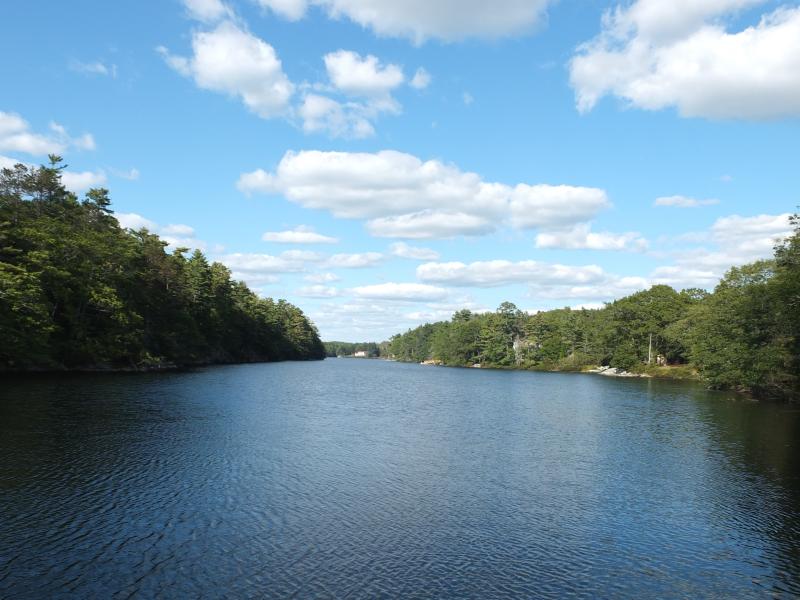 West Harbor Pond. File photo
West Harbor Pond. File photo
West Harbor Pond. File photoIn April, Professor Mary Rogalski, a professor of biology and environmental studies at Bowdoin, sampled West Harbor Pond, where she succeeded in identifying a population of Daphnia ambigua, a highly beneficial microorganism. Rogalski has been studying the ecology and evolution of Daphnia, a type of microscopic crustacean, in lakes and pondsin coastal Maine. Because of the substantial benefits that Daphnia provide to lakes and ponds where they are found, Rogalski is studying the factors– particularly salinity – that favor or disfavor their presence in a particular Maine lake or pond.
Daphnia are so effective at grazing relative to other kinds of zooplankton that they're sometimes called keystone herbivores. They graze on phytoplankton like algae and cyanobacteria, important links in the food chain that can, in overabundance (we call them algal blooms), be detrimental to water quality.Thus, Daphnia can have a substantial beneficial impact on water clarity by serving as a biological control of algal blooms. They're also important food for small fish and predatory invertebrates, so they help transfer the lake's nutrients from phytoplankton to higher levels of the food chain.
However, Daphniaare sensitive to changes in water chemistry, including both natural and elevated levels of dissolved salts (sodium, calcium, chloride). Rogalski’s research is focusing on how Daphnia adapt to differences in salinity levels in Maine's coastal lakes and how this adaptation might positively affect their role in the food web (e.g., as grazers, prey, hosts to parasites).
She is particularly interested in West Harbor Pond because of its relatively high salinity compared with other Maine lakes and ponds and because of the variability of its salinity over time. Salinity levels are most stressful for Daphniaat very low and very high levels. Low-salt conditions common in Maine lakes (due to regional geology) can be stressful for zooplankton like Daphnia. Brackish conditions(about 1/3 sea water) like what are sometimes observed in deeper pockets of West Harbor Pond are lethal to Daphnia. In another lake, Sewall Pond in Arrowsic, however, she discovered that Daphniacanevolve to adapt toyear-to-year changes in salt levels. Salt levels in West Harbor Pond are similar toor a bit higher than those in Sewall Pond, and Rogalski will investigate whether Daphnia show similar adaptability in West Harbor Pond as in Sewall Pond.
She predicts that while Daphnia are best equipped to control algal blooms in moderate salinity conditions, their ability to adapt to local salt levels (both low and high) will help them perform their role as grazers in salinity conditionsthat would otherwise be unfavorable. She hopes that her research on a study group of 12 to 14 Maine lakes, including West Harbor Pond, will aid in understanding how lakes function across differences in salinity.
Her work on West Harbor Pond will involve measuring Daphnia density, comparing the genetic makeup with Daphniain other lakes, and testing Daphniain the lab to measure their salt tolerance. During her April visit, she collected Daphnia samples from the Pond to take back to Bowdoin for further study in her laboratory.
Those interested in learning more about her work can visit her website at maryrogalski.com.